Vastu-Compliant Property vs Vastu-Certified Property: What's the Difference

Enquire Now


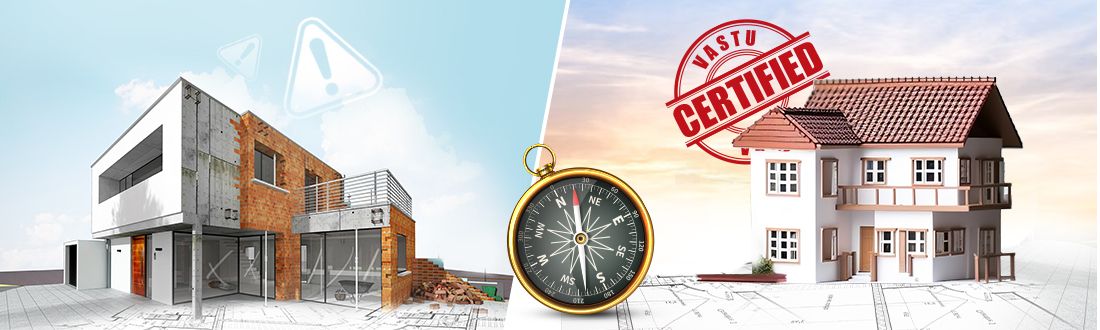
Somewhere in every property viewing, a buyer asks the question almost on reflex: "Is it Vastu compliant?" The broker nods, the buyer relaxes, and the conversation moves on to price. That nod is no longer a small courtesy. Vastu Shastra for house buying has traveled from family custom to general market factors. Reports on home-buying trends show demand for Vastu-aligned homes rising steadily across Indian cities.
Yet the reassuring nod deserves a closer look because "compiled" and "certified" are not the same word, and the gap between them can be considerable. To see why, it helps to know what is being promised. Vastu is an old and layered discipline, rooted in the Satyapatya Veda tradition and worked out through the Vastu Purusha Mandala, a grid that maps directions and the five elements onto a plot.
Ask any seasoned Vastu expert, and you will hear that it is a framework of site, zoning, and proportion, and there must be a single rule about which way the main door faces. This is exactly why one word in a brochure can mean so much or so little. Read on to learn how to tell a promise from proof.
It tells you what someone has chosen to say. A seller, builder, or agent declares that the property follows Vastu, and there the matter ends. There are no common yardsticks, no scorecard, and nobody is answerable later. The claim may rest on careful planning or on a single east-facing entrance, and from the buyer's side of the table, the two look identical.
That is where certification changes the picture. It replaces a statement with the findings. An independent party examines the property against documented criteria and issues a written result that others can verify. Think of a restaurant that calls itself hygienic versus one that displays its inspection grade at the door.
The stakes are real, too. Analyses of property listings suggest Vastu-aligned homes often resell faster, which helps only when the alignment can actually be shown. Timing matters as well because decisions about site zoning and the central Brahmasthan are made on the master plan. Correcting them after construction is costly, sometimes impossible.
It is this gap that the Sustainable Vastu Rating, or SVR, was built to close. Developed by Sayash Vastu and described by the firm as India's first structural Vastu rating for real estate, it scores a project out of 100 across four areas:
What comes out is a tier, not a vague assurance. 80 points and above earns platinum, 70 to 79 Gold, 60 to 69 Silver, and 50 to 59 Bronze. Below 50, there is no certificate at all, which is what gives the issued ones their meaning. Projects are assessed as they stand, at the design stage or after completion, with no redesign demanded first. Each certified project receives an evolution report, an official certificate, a rating badge, and a QR code through which any buyer can confirm the rating independently.
So, the next time a property is called Vastu-compliant, ask three things: who assessed it, against what, and where can I see the result? A good answer exists only when someone has actually certified it.
That is the thinking behind Sayash Vastu, the Vastu expert in India that created SVR, founded by Satish Gupta in 1995 and now carried forward by his son, Yash Gupta. It has spent three decades advising homes, factories, hotels, and developers.
Whether you are launching a project or wondering how your own property would score, a conversation with the team at Sayash Vastu is a sound place to begin.
Is a Vastu-compliant property automatically Vastu-certified?
No, compliance is a claim made by the seller or builder. Certification needs an independent evaluation and documented result.
Who can certify the property for Vastu?
A qualified Vastu consultancy working on a published framework for real estate, like SVR by Sayash Vastu, is one such structured system.
Can a completed property be certified?
Yes, SVR evaluates a project as it stands, whether at the design stage or after completion.
Does certification mean a perfect score?
Not necessarily. Ratings run from bronze to platinum, and a project scoring below 50 points is not certified.
Does a certified property sell at a higher price?
It can support premium pricing and give buyers more confidence, but the market decides the final price.
Read more: Why Spatial Certification Matters for Modern Developments